US-Iran Standoff Puts the World's Oil Jugular at Risk
A US naval blockade of the Strait of Hormuz could spike global oil prices and drag China into direct confrontation with Washington.
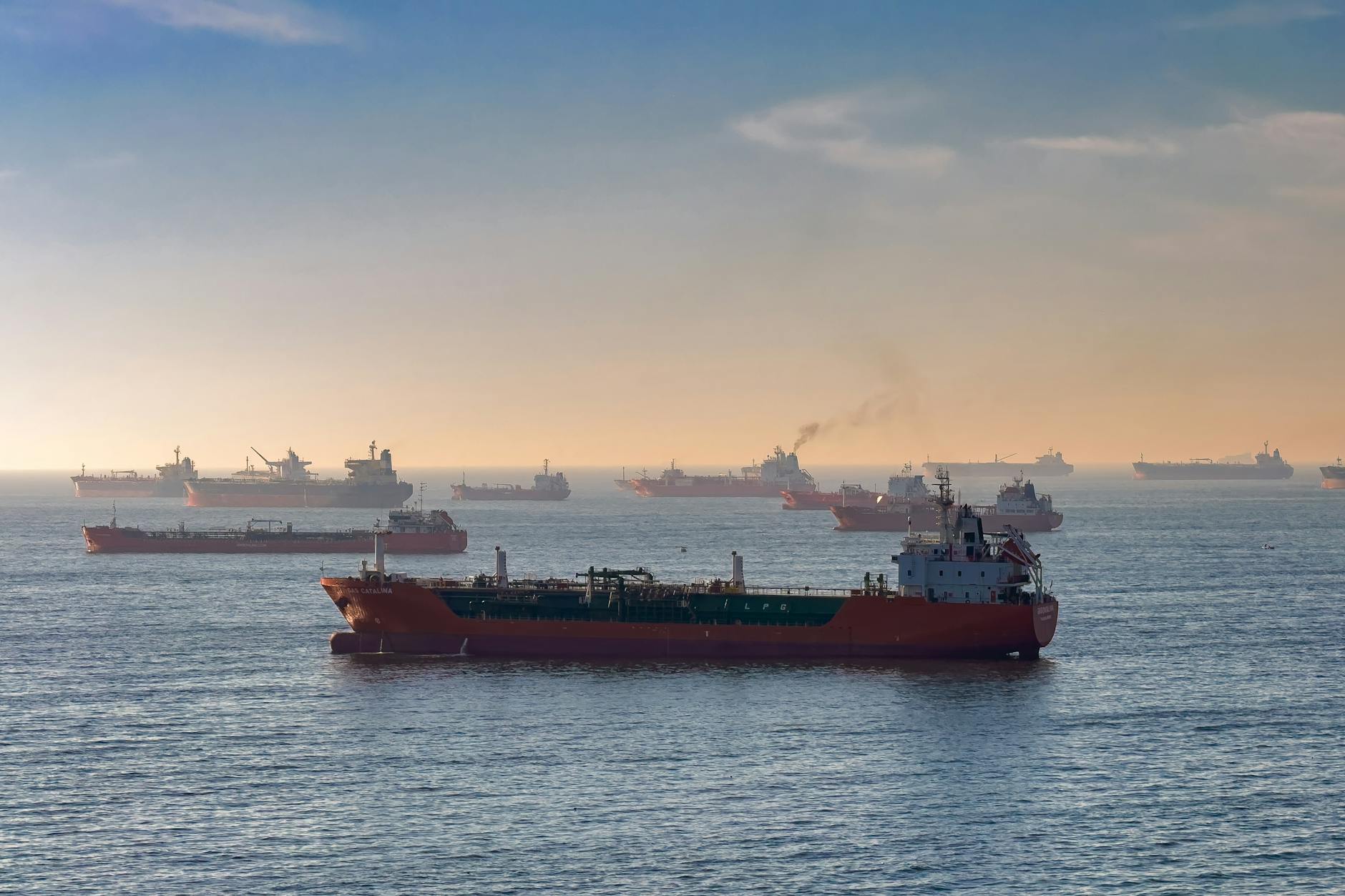
There is a narrow band of water between the southern tip of Iran and the coast of Oman — roughly 33 kilometers at its tightest — through which nearly a fifth of all the oil consumed on Earth passes every single day. Whoever controls the Strait of Hormuz holds a thumb on the jugular of the global economy. Right now, tensions between Washington and Tehran have that thumb pressing harder than it has in years.
What Happened
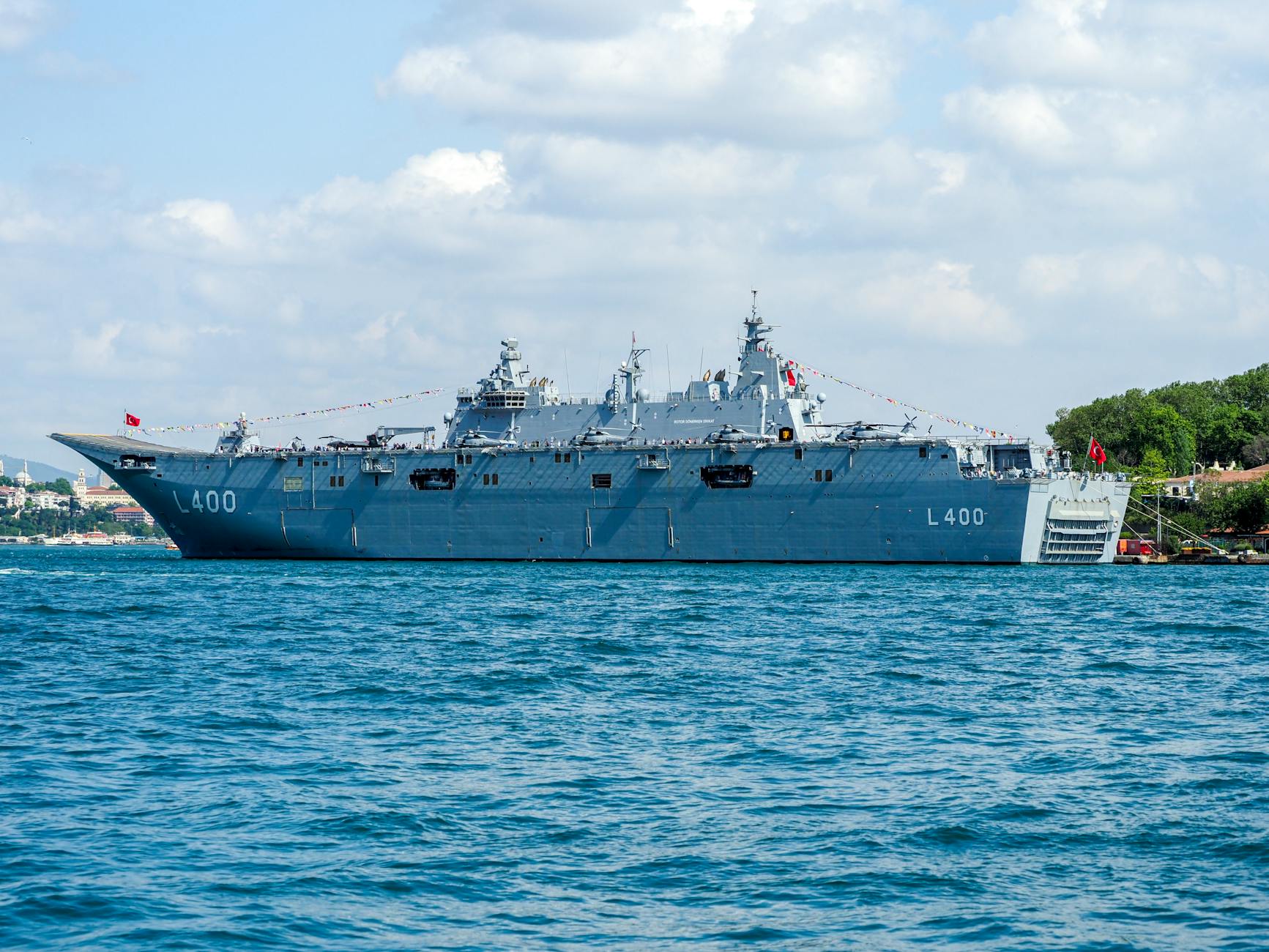 Image: Pexels/Abdurahman Yarichev
Escalating hostilities between the United States and Iran have put a scenario once confined to war-game simulations squarely back on the table: a US naval blockade of the Strait of Hormuz. According to analysis flagged by War Monitor, such an action could halt tanker traffic through the strait entirely, sending oil prices into a spiral and triggering what analysts are calling a potential worst-case scenario for the world’s already fragile energy markets.
The immediate context is a familiar one, though the temperature has risen sharply. US-Iran relations have deteriorated along multiple fault lines simultaneously — nuclear file brinkmanship, proxy skirmishes across the Middle East, and Iranian support for groups Washington designates as terrorist organizations. What has changed is the apparent willingness of hardliners on both sides to contemplate escalation that would have been considered too economically catastrophic to be credible even a few years ago.
A blockade, if enacted, would work in one of two ways: the US Navy seals the strait to Iranian-flagged or Iranian-linked vessels, effectively strangling Tehran’s oil export revenues; or the confrontation escalates to the point where Iran itself threatens to close the strait to all traffic — a move Tehran has brandished as leverage for decades but never fully executed. Both scenarios converge on the same outcome: tankers stop moving, and the world notices almost immediately at the pump.
Why It Matters
The numbers here are not abstractions. According to the US Energy Information Administration, roughly 21 million barrels of oil transit the Strait of Hormuz every day. That figure represents approximately 20–21% of total global petroleum liquids consumption. There is no realistic alternative route that can absorb that volume at speed. Saudi Arabia has a pipeline that bypasses the strait — the East-West Pipeline — but its capacity caps out at around 5 million barrels per day. The arithmetic is brutal: a closure creates an immediate shortfall of 16 million barrels per day with nowhere for markets to go but up.
Even a credible threat of blockade, without a single barrel being diverted, is enough to spike oil prices by 30–50% within days, according to historical modeling of previous Hormuz crises.The human consequences cascade fast. Higher energy costs hit the poorest households first and hardest — heating, transport, food production, all of it becomes more expensive. Economies already carrying significant debt loads from recent inflationary cycles are poorly positioned to absorb another shock. Central banks, which spent years fighting post-pandemic inflation, would face an almost impossible dilemma: hike rates to combat price rises and risk recession, or hold and watch inflation re-ignite.
For Iran, the calculus is equally dangerous. A full blockade would also strangle its own oil exports — the primary source of government revenue. Tehran has historically played the Hormuz card as a deterrent rather than a weapon, knowing that using it would invite overwhelming military response. But deterrents lose their power if the other side no longer believes they will be used, which creates its own ratcheting logic.
The Bigger Picture
 Image: Pexels/Zifeng Xiong
The actor that changes the equation most dramatically is China. Beijing is the single largest buyer of Iranian oil, much of it purchased at a discount specifically because it flows outside Western-sanctioned channels. A US-enforced blockade that cuts off that supply does not just inconvenience Beijing — it directly threatens the energy security of the world’s second-largest economy.
China has been explicit, if carefully worded, about its interests in the Persian Gulf. It maintains naval assets in the region, has deepened its strategic partnership with Iran under a 25-year cooperation agreement signed in 2021, and has every economic incentive to resist any unilateral American action that chokes off a key piece of its energy supply chain. The scenario War Monitor flags — of China being drawn into confrontation with Washington — is not far-fetched. It would not necessarily begin as a shooting war; it might start as Chinese naval escorts for tankers, or Beijing publicly guaranteeing safe passage in defiance of US blockade orders. But any such move would represent a direct challenge to American military supremacy in the region, with all the escalatory potential that implies.
This is the nightmare at the center of the Hormuz crisis: a bilateral US-Iran standoff that pulls in the world’s two largest economies on opposite sides. The Gulf Cooperation Council states — Saudi Arabia, the UAE, Kuwait — would find themselves caught between a US security umbrella they depend on and an energy disruption that would devastate their own export revenues. Even countries with no particular sympathy for Iran would face enormous pressure to oppose a blockade on pure economic self-interest.
It is worth noting that Iran’s perspective is not monolithic. Hardline factions see the Hormuz threat as their ultimate insurance policy — proof that the cost of attacking Iran is too high for any rational actor to pay. Pragmatists within the Iranian system are acutely aware that triggering a full blockade would likely mean the end of what remains of the Iranian economy and possibly the regime itself. That internal tension shapes how seriously any particular threat should be taken, and why analysts are careful to distinguish between signaling and genuine operational intent.
What to Watch
The next few weeks will clarify a great deal. Several indicators are worth tracking closely:
Naval posture in the Gulf. Any significant surge in US carrier group activity or mine-countermeasure vessel deployments to the region would signal that blockade planning has moved from theoretical to operational.
Oil futures markets. Brent crude pricing already bakes in a risk premium for Middle East instability; a sudden, sustained spike above $110–120 per barrel would suggest traders are pricing in a non-trivial probability of supply disruption.
Chinese diplomatic messaging. Watch for any formal statement from Beijing that frames Hormuz access as a matter of Chinese national interest. That would represent a significant escalation in China’s willingness to contest American dominance in the Gulf.
Back-channel diplomacy. Historically, the most dangerous US-Iran moments have been de-escalated through intermediaries — Qatar, Oman, and Switzerland have all played this role. Any reports of intensified shuttle diplomacy would be a positive signal.
Iranian domestic politics. Factional shifts in Tehran — particularly any weakening of pragmatist voices relative to the IRGC — would raise the risk of miscalculation.
The Strait of Hormuz has been called a chokepoint so many times that the phrase has lost its force. But the geography is real and unchanged: thirty-three kilometers of water that the entire modern economy depends upon. The current US-Iran trajectory is heading toward that bottleneck. Whether it stops in time is one of the most consequential questions in geopolitics right now.
Sources: War Monitor conflict dashboard; US Energy Information Administration world oil transit data; Reuters regional coverage.