The Strait That Could Break the Global Economy
A US-Iran standoff over the Strait of Hormuz risks choking 20% of global oil, spiking energy prices, and pulling China into a superpower confrontation.
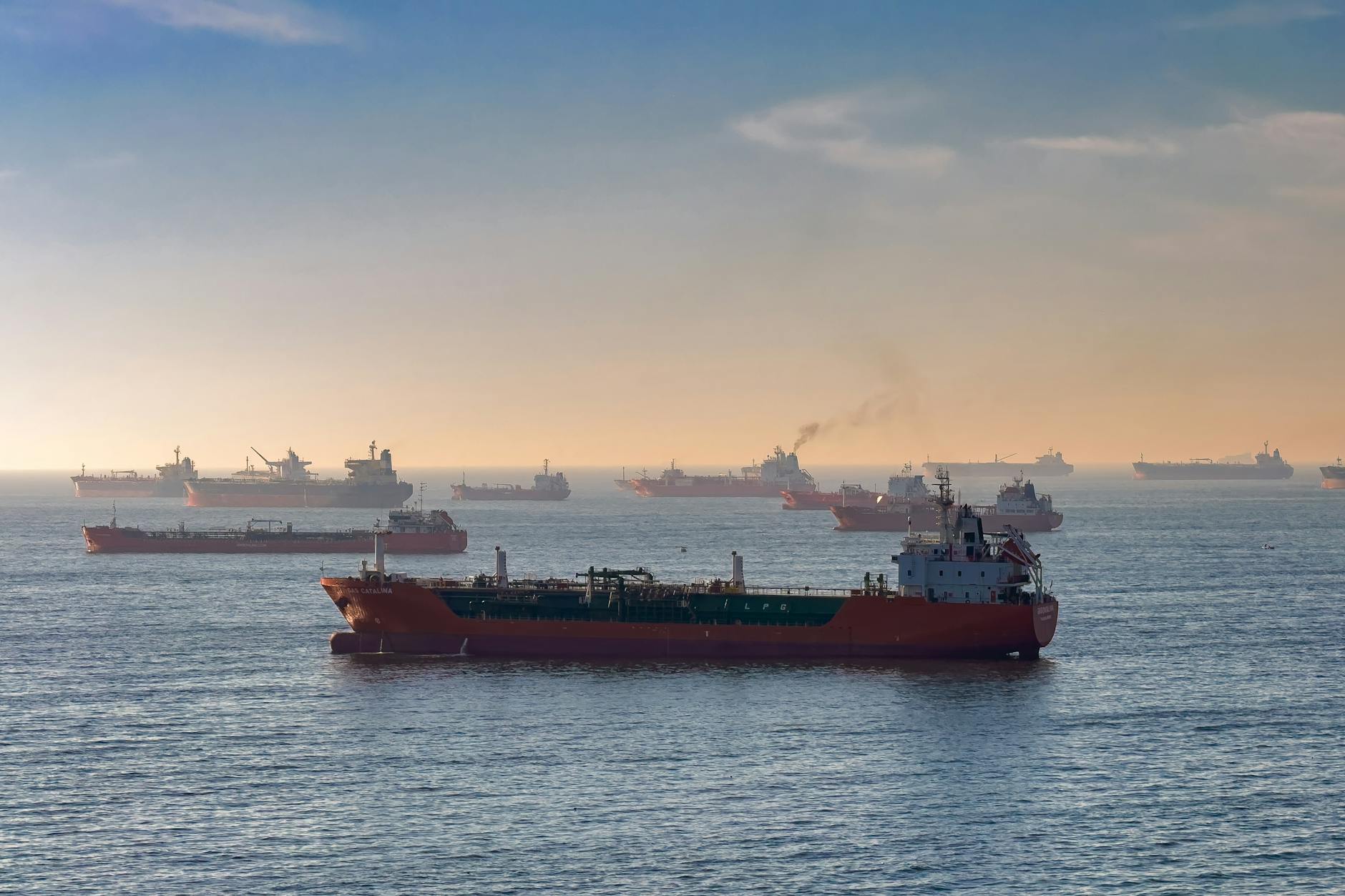
Imagine turning off a tap that supplies one-fifth of the world’s oil. Not a slowdown. Not a disruption. An off switch. That is the scenario now being war-gamed in Washington, Tehran, Beijing, and every major energy trading desk on the planet — and it may be closer to reality than markets are currently pricing in.
The Strait of Hormuz, the narrow 21-mile-wide passage between Iran and Oman, has always been the throat of the global energy system. Squeeze it, and the patient suffocates. What is new in the current standoff is that both sides of the US-Iran confrontation appear willing — or are at least signaling willingness — to be the one doing the squeezing.
What Happened
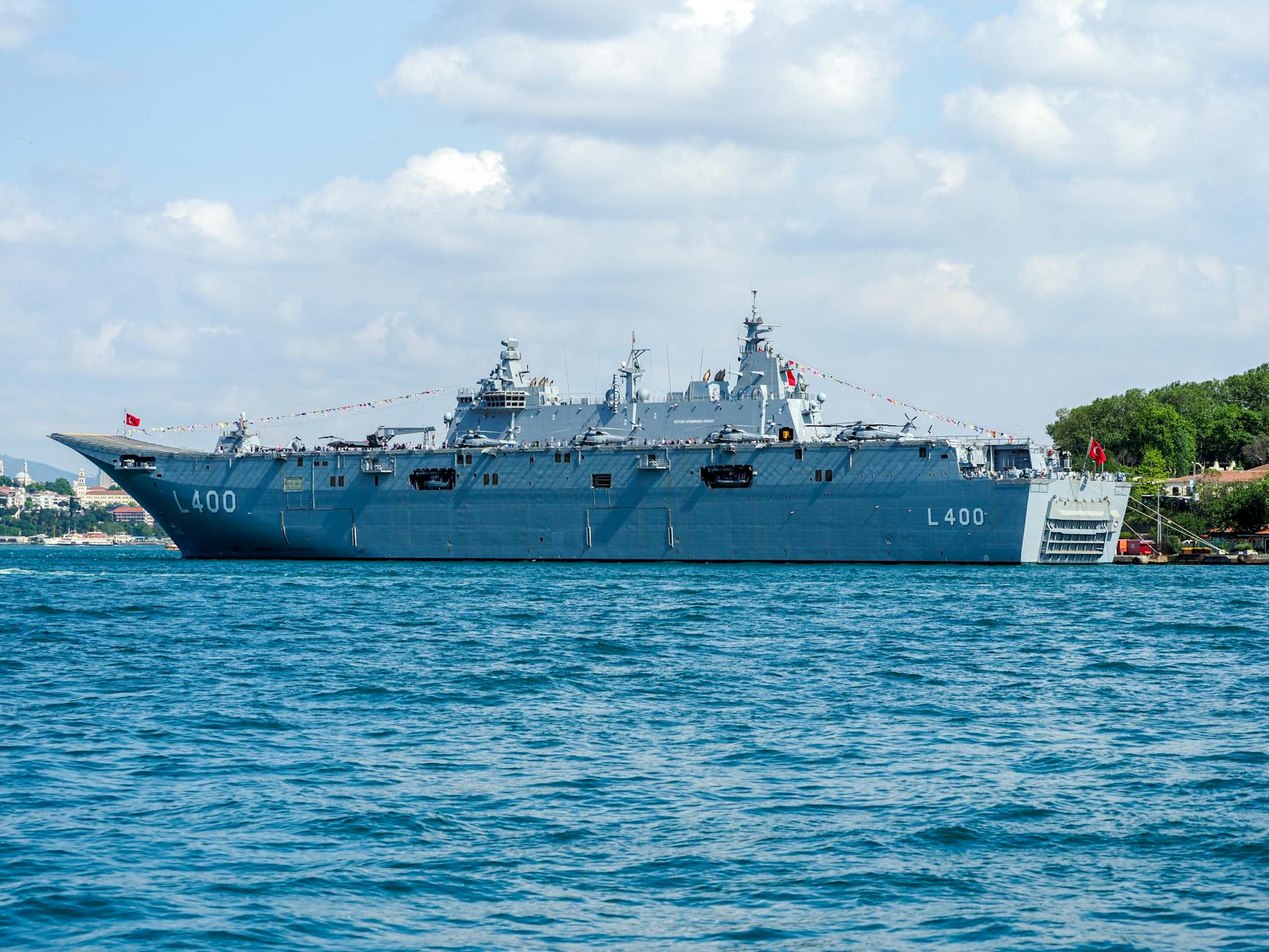 Image: Pexels/Abdurahman Yarichev
According to monitoring by War Monitor, the threat calculus around Hormuz escalated sharply in mid-April 2026, with scenario planning around a potential US naval blockade of Iranian oil exports moving from think-tank abstraction into active geopolitical discussion. The severity rating on the incident cluster was pegged at 8 out of 10 — one of the higher readings for a non-kinetic scenario on the platform.
The mechanics are straightforward, even if the politics are anything but. Washington has long held the option of choking off Iranian crude exports entirely — not merely through the existing sanctions architecture, but through physical naval interdiction in or near the strait. Under such a scenario, tankers carrying Iranian oil would be turned back or boarded, effectively ending Tehran’s ability to monetize its primary export.
Iran’s counter-threat — one it has made credibly and repeatedly since at least 2011 — is to close the strait altogether if its own exports are blocked. Iranian commanders from the Islamic Revolutionary Guard Corps Navy have invested heavily in anti-ship missile systems, fast-attack craft, and sea-mine capabilities precisely to make that threat believable. The logic is mutually assured economic destruction: if we can’t sell our oil, nobody gets their oil.
What makes the current moment different from previous peaks of Hormuz tension is the degree to which China sits directly in the crossfire. Beijing now sources roughly 40% of its crude imports from Gulf producers whose tankers transit the strait, according to data tracked by the U.S. Energy Information Administration. A closed or contested strait is not an abstraction for China — it is an existential energy problem with immediate economic consequences.
Why It Matters
A sustained Hormuz disruption would be the single largest supply shock to global energy markets since the 1973 Arab oil embargo — and the world is far less prepared for it than it was then.The arithmetic is brutal. The strait handles approximately 17-20 million barrels of oil per day, per EIA estimates — a figure that includes crude, condensate, and refined petroleum products. No alternative route exists that can absorb that volume. The Suez Canal is too small. Overland pipelines have limited capacity. The Saudi East-West pipeline, one of the few partial bypasses, can move roughly 5 million barrels per day at full stretch — less than a third of what Hormuz carries.
Oil markets are already operating with thin spare capacity margins after years of underinvestment. A Reuters analysis of energy futures markets has repeatedly shown that even rumors of Hormuz disruption push Brent crude up by $5-10 per barrel within hours. An actual, sustained blockade — lasting weeks rather than days — would send prices into territory that most economists believe would trigger a global recession.
The human dimension is no less severe. Countries across South Asia and East Africa — economies with thin foreign exchange reserves and heavy energy import dependence — would face fuel shortages, food price spikes (fertilizer and transport costs surge with oil), and potential social instability far faster than the wealthy nations that often dominate the geopolitical conversation.
For Europe, still managing the residual scars of the 2022-2024 energy shock following Russia’s invasion of Ukraine, another major supply disruption would arrive before energy infrastructure hardening is complete. The political consequences inside EU member states — already under pressure from cost-of-living crises and the rise of energy-nationalist parties — could be severe.
 Image: Pexels/AlphaTradeZone
The Bigger Picture
The Hormuz standoff does not exist in isolation. It sits at the intersection of three converging crises that, together, create a risk environment more complex than any single flashpoint.
First, the US-Iran nuclear file remains unresolved. Whatever the current state of diplomatic back-channels — and both Reuters and the BBC have reported sporadic, indirect contacts — no framework agreement is in place. Without one, the maximum-pressure logic in Washington and the maximum-resistance logic in Tehran continue feeding each other.
Second, China’s posture has shifted. Beijing has historically avoided direct military confrontation over Gulf energy access, preferring economic diplomacy and hedged relationships with multiple regional actors. But that calculus is being tested. According to Council on Foreign Relations analysts, Chinese strategic planners now openly acknowledge that their energy dependency on the Gulf is a structural vulnerability — and that a US naval action that physically cuts Chinese energy supplies would cross a red line that previous Hormuz crises did not approach. How Beijing would respond — diplomatically, economically, or in some more direct way — is the great unknown that makes this scenario categorically different from prior standoffs.
Third, the regional security architecture that once provided a degree of crisis management — US-Gulf Arab partnerships, the residual influence of multilateral nuclear diplomacy — is frayed. Saudi Arabia has pursued strategic hedging, normalizing relations with Iran in 2023 and deepening ties with Beijing. The Gulf Cooperation Council states have their own interests in keeping the strait open that do not perfectly align with Washington’s. A US naval action in or near the strait could fracture relationships that American planners would prefer to keep intact.
The result is a situation in which every major actor has both strong incentives to avoid an actual closure and strong domestic or strategic pressures that make backing down politically costly. That combination — high stakes, constrained maneuver — is historically where miscalculation happens.
What to Watch
Several indicators will signal whether this threat is moving from posture to reality, or beginning to de-escalate.
Watch tanker insurance rates. The London insurance market’s war-risk premiums for Hormuz transits are a real-time thermometer for how professional risk assessors — people with money on the line — are reading the situation. A sustained spike in those rates indicates genuine market belief in disruption risk, not just political noise.
Watch Chinese diplomatic signaling. If Beijing begins making public statements specifically addressing Hormuz or US naval movements in the Gulf — beyond the standard sovereignty boilerplate — it suggests internal assessments have shifted toward taking the scenario seriously. A visit or phone call between senior Chinese and Iranian officials in the coming weeks would warrant close attention.
Watch Iranian IRGC Navy movements. Any significant repositioning of fast-attack craft, mine-laying vessels, or anti-ship missile systems closer to the strait’s chokepoints would represent an operational signal that goes beyond rhetoric. Open-source satellite imagery services have made it significantly harder for such movements to go unnoticed.
Watch the oil price. Markets often know things before analysts do. A sustained move above $100 per barrel in Brent crude without a corresponding supply story elsewhere would suggest that large, sophisticated traders are building in a Hormuz risk premium.
The Strait of Hormuz has been the world’s most dangerous waterway in energy terms for half a century. What has changed in 2026 is that the actors circling it include a superpower in Washington with domestic political incentives to project maximum pressure, a regime in Tehran that has concluded economic pain is preferable to strategic capitulation, and a rising power in Beijing for whom the outcome is no longer peripheral. That is a combination the world has not navigated before. The strait is narrow. The margins for error are narrower still.
Sources: War Monitor crisis dashboard; U.S. Energy Information Administration (Hormuz Fact Sheet); Reuters energy and geopolitics coverage; BBC News Middle East desk; Council on Foreign Relations Iran and Gulf security analysis.