Dual Measles and Meningitis Outbreaks Strike Conflict-Displaced Populations in Chad
Eastern Chad faces simultaneous measles and meningitis C outbreaks amid mass displacement from Sudan, while clade 1b mpox reaches Denmark.
Overview
Eastern Chad is contending with two simultaneous disease outbreaks — measles and meningitis C — in a region already overwhelmed by one of the world’s fastest-growing displacement crises. According to reporting from the Center for Infectious Disease Research and Policy (CIDRAP), the outbreaks are concentrated in eastern Chad, directly adjacent to the Sudanese border, where a prolonged and intensifying armed conflict has driven hundreds of thousands of civilians across the frontier in search of safety. The convergence of mass displacement, disrupted immunization infrastructure, and compromised sanitation has created near-ideal conditions for pathogen spread.
Simultaneously, European health authorities have recorded a confirmed case of clade 1b mpox in Denmark — a development that signals continued international dissemination of the variant that emerged from the Democratic Republic of Congo and has since been detected across sub-Saharan Africa and, increasingly, beyond it. While these events are geographically and epidemiologically unconnected, together they illustrate the widening arc of infectious disease threats in 2026.
This article focuses primarily on the Chad situation, which represents the more acute humanitarian emergency, while also contextualizing the Danish mpox case within the broader global picture.
Current Situation
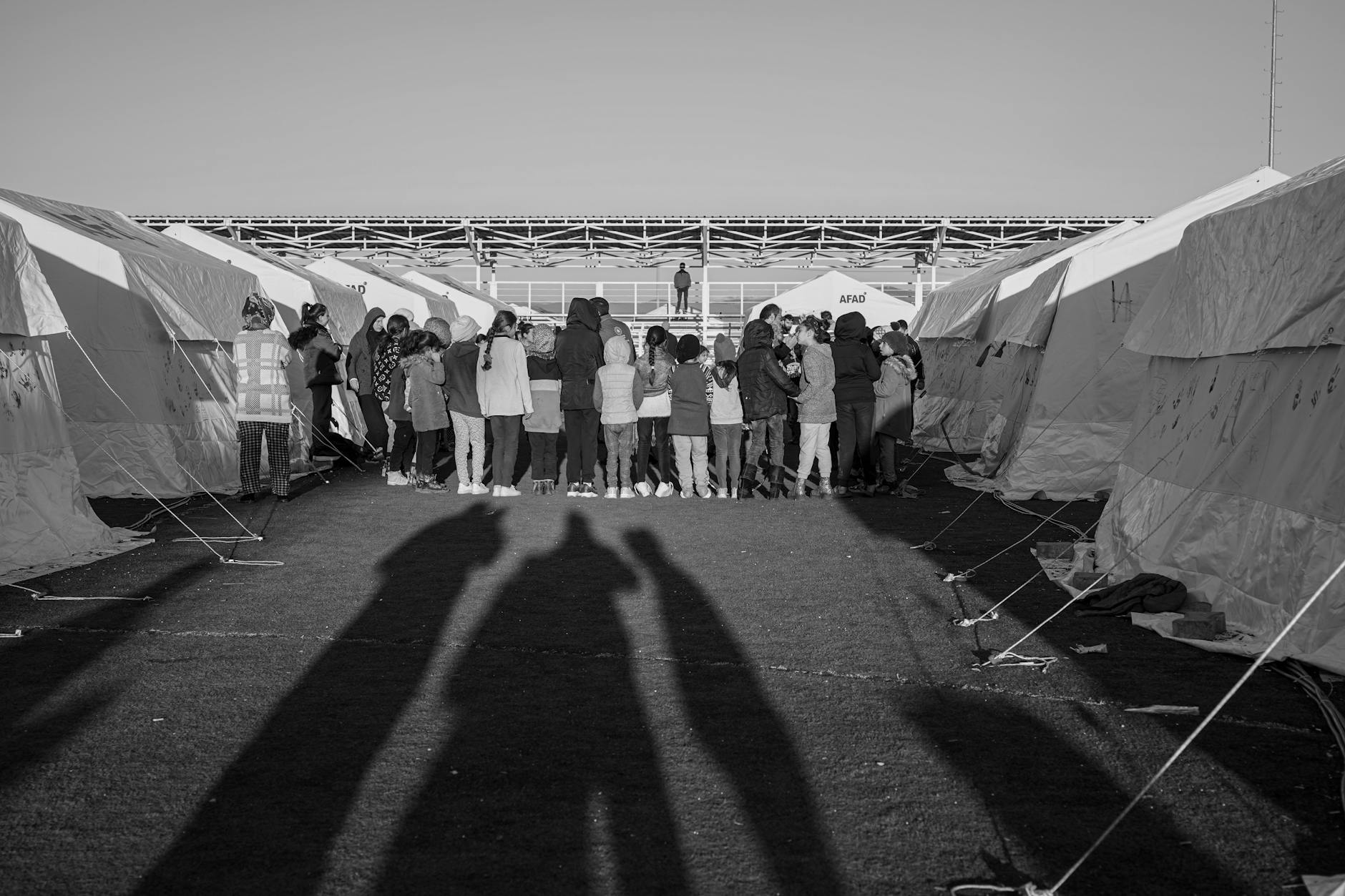
 Image: Pexels/Mufid Majnun
According to CIDRAP, eastern Chad is experiencing active transmission of both measles and meningitis serogroup C among populations that include a significant proportion of recently displaced individuals. Precise case counts and mortality figures from this specific outbreak wave had not been independently confirmed in official WHO situation reports at the time of publication, and figures from the Chad Ministry of Public Health and Médecins Sans Frontières field teams operating in the region should be consulted for the most current epidemiological tallies.
What is documented is the structural vulnerability of the affected population. Measles, caused by the Morbillivirus genus, spreads with extraordinary efficiency in crowded, under-vaccinated settings — its basic reproduction number (R₀) ranges from 12 to 18, making it one of the most contagious infectious diseases known. Meningitis C, caused by Neisseria meningitidis serogroup C, carries a case fatality rate of approximately 10–15% even with prompt treatment; in settings where antibiotic access is delayed or unavailable, this figure can climb substantially higher.
The co-occurrence of these two pathogens is not coincidental. Both exploit the same underlying vulnerability: populations with interrupted vaccination histories, living at high density, with limited access to clean water, diagnostic capacity, and referral care.
In Denmark, the clade 1b mpox detection represents a single confirmed case, per CIDRAP’s reporting. European health agencies including the European Centre for Disease Prevention and Control (ECDC) have been tracking the spread of clade 1b — the more transmissible subvariant that has driven outbreaks in DRC, Burundi, Rwanda, and Uganda since 2023 — and its detection in Scandinavia is consistent with the pattern of travel-associated importations documented across Europe over the preceding 12 months.
Affected Regions
 Image: Pexels/Lara Jameson
The epicenter of Chad’s dual outbreak lies in the country’s eastern provinces — Ouaddaï, Sila, and Wadi Fira are among the administrative regions historically most exposed to cross-border displacement from Darfur and eastern Sudan. Chad has hosted Sudanese refugees since the Darfur crisis of the early 2000s, and the camps and informal settlements along this border corridor are among the most densely populated and under-resourced in sub-Saharan Africa.
The ongoing conflict in Sudan — now entering its third year following the outbreak of fighting between the Sudanese Armed Forces and the Rapid Support Forces in April 2023 — has produced what the United Nations High Commissioner for Refugees (UNHCR) has described as one of the largest displacement emergencies globally. Newly arriving populations tend to have disrupted immunization records, weakened nutritional status that further depresses immune function, and limited prior exposure to the specific disease-control infrastructure present in Chad’s border zones.
This creates what epidemiologists term a susceptibility gap: a large cohort of individuals who may lack immunity either through prior vaccination or natural infection, inserted into a geographic zone where pathogens are already circulating. Measles, in particular, can reignite in settings where population immunity falls below the 95% herd immunity threshold, and displacement almost invariably disrupts routine immunization coverage.
For meningitis C, the meningitis belt of sub-Saharan Africa — a latitudinal band stretching from Senegal to Ethiopia — encompasses much of Chad, and the dry-season epidemiological window (roughly November through May) corresponds with conditions of low humidity and dusty air that facilitate nasopharyngeal carriage and transmission of Neisseria meningitidis.
Denmark’s mpox case does not represent a cluster or sustained transmission event at this stage, but it does extend clade 1b’s documented geographic range to the Nordic region. Health authorities will be monitoring for secondary cases linked to the index patient’s contacts.
Risk Assessment
The combination of active measles and meningitis C transmission in a displacement setting with limited health system capacity represents a high-risk scenario for excess mortality among children under five and immunocompromised adults.The World Health Organization classifies Chad as a country with persistently fragile health infrastructure, and the eastern provinces face compounding challenges: stretched health worker capacity, cold-chain vulnerabilities affecting vaccine potency, and a referral pathway for severe meningitis cases that may require hours of travel to reach hospital-level care.
For measles, the highest-risk group is children between six months and five years of age who have not completed the two-dose MMR (measles, mumps, rubella) vaccination schedule. Malnutrition, which is endemic among displaced populations, dramatically worsens measles outcomes — increasing the probability of complications including pneumonia, encephalitis, and vitamin A deficiency-related blindness.
For meningitis C, adolescents and young adults represent a disproportionately affected demographic in serogroup C outbreaks, alongside infants under one year. The speed of clinical deterioration in bacterial meningitis — from initial symptoms to death within 24–48 hours if untreated — makes it a particular threat in settings where healthcare-seeking is delayed or facilities are distant.
The international risk associated with Chad’s outbreaks remains primarily a humanitarian concern rather than a cross-border public health emergency for higher-income nations. Measles does present re-importation risks to countries with declining vaccination coverage — a trend observed in parts of Western Europe and the United States — but this is a secondary consideration relative to the immediate crisis in Chad.
The Danish clade 1b mpox case is assessed as low risk for broader community transmission in Denmark at present, given the country’s established mpox response protocols, access to JYNNEOS vaccination, and contact-tracing capacity. However, clade 1b’s higher transmissibility compared to the clade 2 variant responsible for the 2022 global outbreak warrants continued vigilance.
Prevention & Response
Outbreak response in eastern Chad is being coordinated across multiple actors. UNICEF, WHO’s Regional Office for Africa (AFRO), and Médecins Sans Frontières have established track records of deploying rapid vaccination campaigns in displacement contexts, and reactive measles immunization — targeting all children under 15 in affected zones regardless of prior vaccination history — is the standard international protocol.
For meningitis C, MenAfriVac and the broader meningococcal conjugate vaccines available through the Meningitis Vaccine Project and Gavi, the Vaccine Alliance have transformed outbreak response capacity in the meningitis belt over the past decade. Reactive vaccination campaigns using meningococcal conjugate vaccines can effectively halt serogroup C outbreaks when deployed at sufficient scale and speed, and stocks are typically pre-positioned in WHO’s emergency stockpile for rapid deployment.
Supportive measures include the distribution of oral rehydration salts and vitamin A supplementation (which reduces measles case fatality), enhanced surveillance to detect new cases early, and community health worker mobilization to identify and refer severe cases promptly.
For mpox in Denmark, established European protocols call for ring vaccination of close contacts using the JYNNEOS vaccine, contact tracing of the index case, and clinical isolation. The ECDC and the European Health Emergency Preparedness and Response Authority (HERA) maintain coordination mechanisms for exactly this type of travel-associated clade 1b importation.
A broader note on the global disease landscape: CIDRAP’s April 28 report also referenced a gonorrhea vaccine candidate advancing through clinical development — a significant potential breakthrough given the escalating burden of antimicrobial-resistant Neisseria gonorrhoeae globally. While outside the immediate outbreak scope of this article, it reflects the active pipeline of tools being developed to address bacterial sexually transmitted infections that have outpaced antibiotic treatment options.
The Chad situation will require sustained international attention and funding well beyond the initial reactive response phase. Displacement crises have a well-documented tendency to produce extended, multi-wave disease outbreaks as new populations continue arriving and health system capacity remains constrained. Durable solutions — including integration of displaced populations into national immunization registries and investment in permanent health facility capacity in border zones — are prerequisites for preventing future outbreaks from reaching the scale of humanitarian emergency.
Sources
- CIDRAP – Center for Infectious Disease Research and Policy. “Quick takes: Measles, meningitis outbreaks in Chad; clade 1b mpox in Denmark; gonorrhea vax candidate.” April 28, 2026. https://www.cidrap.umn.edu/measles/quick-takes-measles-meningitis-outbreaks-chad-clade-1b-mpox-denmark-gonorrhea-vax-candidate