Chikungunya Virus Resurges Globally Amid Expanding Mosquito Range
ECDC monitors rising chikungunya transmission worldwide as the virus spreads to new regions via Aedes mosquitoes. Key facts for travelers and clinicians.
Overview
Chikungunya virus, a mosquito-borne alphavirus first identified in Tanzania in 1952, has evolved from a disease of limited geographic concern into a genuinely global public health challenge. Transmitted primarily by Aedes aegypti and Aedes albopictus mosquitoes — the same species responsible for dengue and Zika — chikungunya has established sustained transmission on every inhabited continent except Antarctica, with periodic epidemic flares that overwhelm local health systems.
The European Centre for Disease Prevention and Control (ECDC) tracks the virus through its monthly worldwide epidemiological overviews, integrated into the agency’s weekly Communicable Diseases Threat Report. These assessments compile surveillance data from national health authorities, the World Health Organization (WHO), and regional bodies such as the Pan American Health Organization (PAHO), providing one of the most consistent longitudinal records of the disease’s global footprint.
Chikungunya’s clinical profile is deceptive. The case fatality rate is low — generally estimated below 0.1% — making it easy to underestimate. But the virus’s signature symptom, severe polyarthralgia (joint pain), can persist for months or even years after acute infection, generating an enormous burden of long-term disability that rarely shows up in headline case counts. In epidemic settings, health systems face dual pressure: managing the acute wave and then the chronic rehabilitation needs that follow.
Current Situation
 Image: Pexels/Funkcinės Terapijos Centras
The global transmission picture as of early 2026 reflects a disease in geographic expansion rather than contraction. Across the Americas, the Caribbean basin and parts of Central and South America continue to report active circulation, consistent with the endemic patterns established since the virus first arrived in the Western Hemisphere in late 2013. Brazil has historically accounted for the largest share of reported cases in the region; in recent years, annual case counts in that country alone have reached into the hundreds of thousands, according to PAHO surveillance bulletins.
In Asia, transmission remains intense across the Indian subcontinent and Southeast Asia, with India reporting cyclical outbreaks that can affect millions within a single transmission season. The WHO South-East Asia Regional Office has noted that underreporting is endemic to the region due to symptom overlap with dengue fever, meaning official tallies systematically undercount the true burden.
Europe, historically a zone of imported cases only, recorded a landmark domestic outbreak in Italy in 2007 and has since tracked sporadic local transmission in southern European countries where Aedes albopictus — the tiger mosquito — has become firmly established. The ECDC specifically monitors the Italian peninsula, the southern Balkans, and parts of Spain and France as areas with vector presence sufficient to sustain local chains of transmission.
The overall trajectory is one of widening endemic zones, not contraction. Climate-linked range expansion of Aedes mosquitoes into higher latitudes and altitudes is a documented driver, as warmer and wetter conditions extend the transmission season and open previously inhospitable territory to the vector.
Affected Regions
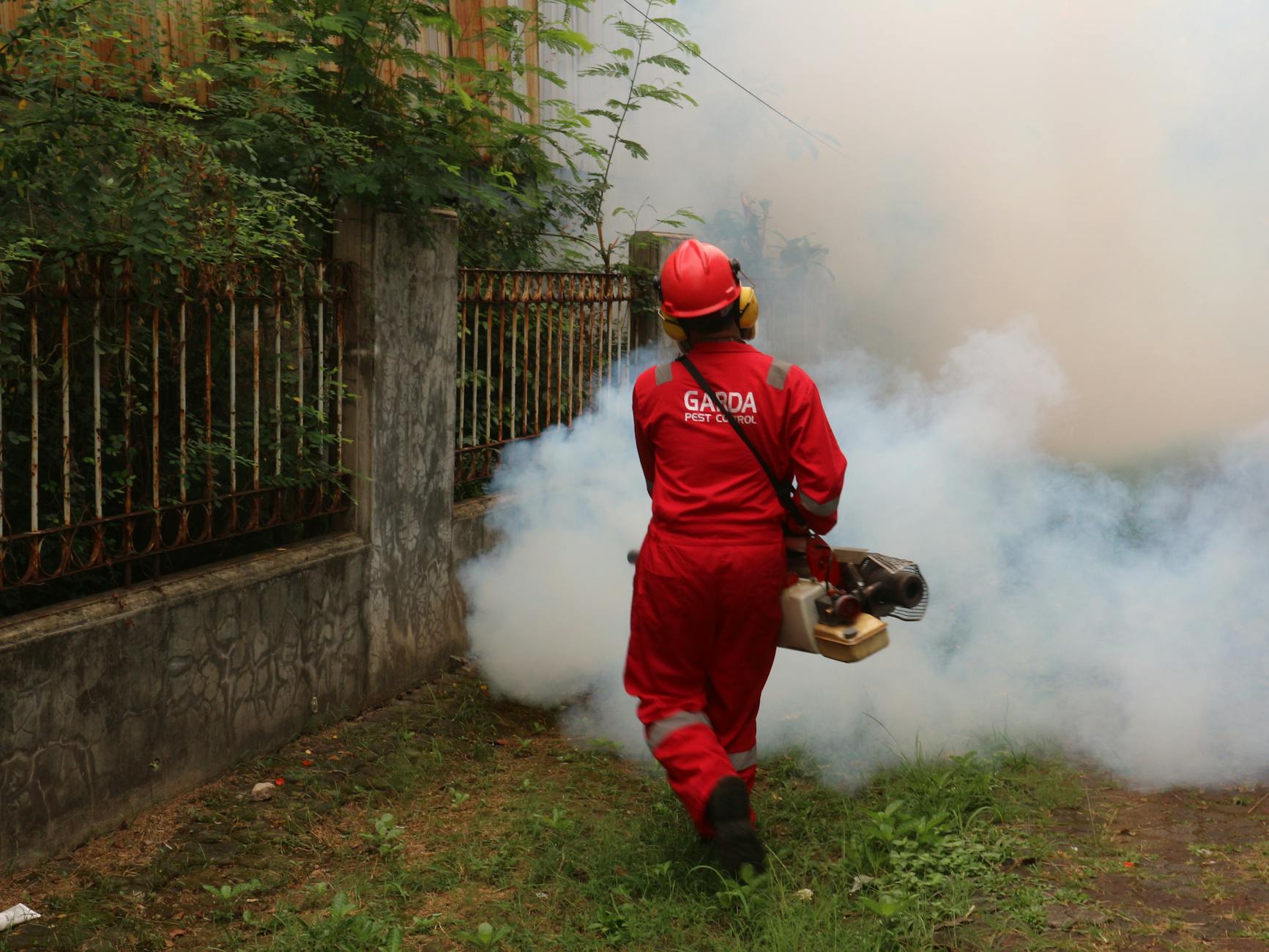 Image: Pexels/Garda Pest Control Indonesia
Chikungunya’s burden is not distributed evenly, and understanding the geographic patchwork matters for both travelers and public health planners.
The Americas remain the region of highest current transmission intensity. Beyond Brazil, Colombia, Bolivia, and several Caribbean island nations have reported epidemic activity in recent years. The Caribbean has been in an essentially endemic state since the 2013-2014 introduction, with annual case surges driven by herd immunity gaps in younger birth cohorts with no prior exposure.
Asia carries a massive, if often undercounted, burden. India’s repeated outbreaks — particularly in southern and western states — expose tens of millions of people to risk annually. Sri Lanka, Thailand, Indonesia, and the Philippines have all reported significant transmission in recent years. The virus’s emergence in Pakistan has added to regional concern, given the country’s large, mobile population and health infrastructure constraints.
Africa, the continent of origin, experiences endemic circulation across sub-Saharan regions, though surveillance infrastructure limits the granularity of reporting. The Indian Ocean islands — particularly Réunion and the Comoros — have suffered devastating outbreaks historically and remain at elevated risk.
In Europe, the ECDC classifies the risk as low but non-negligible for southern European countries. The concern is not sustained epidemic spread but rather imported cases seeding local clusters in areas where Aedes albopictus populations are established. Italy, in particular, has remained on heightened alert since its 2007 Emilia-Romagna outbreak, which demonstrated that autochthonous transmission was epidemiologically possible in a temperate European setting.
Risk Assessment
The WHO categorizes chikungunya as a disease of epidemic potential with a low but real risk of international spread via travel. The virus does not transmit person-to-person; infection requires a competent mosquito vector, which places geography and vector ecology at the center of any risk calculation.
Travelers returning from endemic regions who develop sudden high fever with severe joint pain within two weeks of arrival should seek immediate medical evaluation — early diagnosis prevents mismanagement as dengue and reduces onward transmission risk in areas with local vector populations.Vulnerable populations face disproportionate risk. Neonates born to viremic mothers can acquire the infection perinatally, with reported severe outcomes including neurological complications. Adults over 65 and individuals with underlying joint conditions face higher likelihood of prolonged, debilitating arthralgia that can extend well beyond the acute phase. Studies published in peer-reviewed journals have documented chronic joint symptoms persisting in a meaningful proportion of patients — some estimates range from 30% to 40% of cases experiencing symptoms lasting more than three months.
Transmission dynamics are dictated by vector density and human movement. Dense urban environments with inadequate waste management — which creates standing water breeding sites — are particularly vulnerable. Port cities and tourist hubs function as amplification nodes, exporting the virus via viremic travelers before local health systems detect the arrival.
Prevention & Response
The public health response to chikungunya operates across several layers, from individual protection to systems-level vector control.
In November 2023, the U.S. Food and Drug Administration approved IXCHIQ (chikungunya vaccine, live attenuated), manufactured by Valneva, marking the first licensed chikungunya vaccine available anywhere. The approval was initially for adults 18 and older at increased risk of exposure, including travelers to endemic areas. Regulatory processes in other jurisdictions are ongoing, and the WHO has been working to define prequalification pathways that could eventually make the vaccine accessible in lower-income endemic countries — though cost and cold-chain logistics remain significant barriers for mass deployment in the highest-burden settings.
At the community level, vector control remains the backbone of outbreak response. This includes indoor residual spraying, larval source reduction (removing or treating standing water), and distribution of insecticide-treated bed nets and personal repellents. The PAHO technical guidance emphasizes integrated vector management — combining chemical, biological, and environmental approaches rather than relying solely on insecticide spraying, which risks accelerating resistance in Aedes populations.
Clinically, treatment is supportive. There is no approved antiviral specific to chikungunya. Management centers on analgesics and anti-inflammatory agents for joint pain, hydration, and rest. The ECDC recommends that clinicians in areas with Aedes vector presence maintain chikungunya on the differential for febrile patients with arthralgia, particularly during the summer transmission season in southern Europe.
Public health surveillance quality is improving but remains uneven globally. The ECDC’s monthly worldwide review serves a critical function: aggregating incomplete national-level data into a coherent continental and global picture that allows earlier detection of emerging trends. Strengthening laboratory diagnostic capacity in endemic regions — particularly to distinguish chikungunya from dengue, which shares the same vectors and presents similarly — is a stated priority in WHO and PAHO frameworks.
For the general public, the message from health authorities is consistent: in areas with Aedes mosquitoes, personal protection matters. Long-sleeved clothing, EPA-registered repellents containing DEET or picaridin, and elimination of standing water around homes are evidence-based measures that reduce individual risk regardless of whether a formal outbreak has been declared in a given area.
Sources
- European Centre for Disease Prevention and Control (ECDC) — Chikungunya Worldwide Overview (updated monthly): https://www.ecdc.europa.eu/en/chikungunya-monthly
- World Health Organization (WHO) — Chikungunya Fact Sheet: https://www.who.int/news-room/fact-sheets/detail/chikungunya
- Pan American Health Organization (PAHO) — Chikungunya Epidemiological Alerts and Updates: https://www.paho.org/en/topics/chikungunya