CDC Suppresses COVID Vaccine Efficacy Report Amid Political Dispute
The CDC blocked publication of a completed vaccine efficacy study, raising concerns about scientific integrity and public health communication in the United States.

Overview
A completed internal study on COVID-19 vaccine effectiveness has been blocked from publication by the Centers for Disease Control and Prevention (CDC), according to reporting by the Center for Infectious Disease Research and Policy (CIDRAP). The report, which reportedly demonstrates measurable protection from COVID vaccines, was scheduled for release in the Morbidity and Mortality Weekly Report (MMWR) — the CDC’s primary scientific publication — on March 19, 2026, but was pulled before it went live.
The suppression of the study is drawing significant criticism from public health professionals and former agency officials. Multiple anonymous CDC employees have characterized the decision as politically motivated rather than grounded in scientific or methodological concerns. The incident arrives against a broader backdrop of institutional turbulence at the CDC, including contested changes to vaccine policy that are now subject to active legal challenge.
While this is a domestic regulatory and scientific integrity story rather than a new disease outbreak, its implications for pandemic preparedness and public trust in health institutions carry significant global relevance.
Current Situation
 Image: Pexels/Werner Pfennig
The blocked report was fully prepared and had cleared the internal review pipeline necessary for publication in the MMWR, according to CIDRAP’s reporting. Its findings reportedly affirm the protective value of COVID-19 vaccines — a conclusion that aligns with the substantial body of peer-reviewed evidence accumulated over the past several years.
CDC Director Jay Bhattacharya has defended the decision not to publish, though the specific scientific rationale offered has not been made fully public. Several anonymous CDC staff members have contradicted that framing, stating to CIDRAP that the suppression was a political act rather than a response to data quality concerns.
The MMWR has historically functioned as a scientifically autonomous outlet. Publication decisions are typically guided by peer review and editorial judgment rather than senior leadership intervention. The apparent departure from that norm in this instance is what has alarmed many in the public health community.
Separately, a hantavirus case has been reported in Nevada, per a brief notice included in CIDRAP’s April 30 roundup. Hantavirus pulmonary syndrome is a rare but severe respiratory illness transmitted through contact with infected rodent droppings; it does not spread person-to-person. That case appears unrelated to the CDC publication dispute but is worth monitoring given the disease’s high case fatality rate — historically ranging from 30 to 40 percent in confirmed U.S. cases, according to CDC data.
Affected Regions
The publication dispute is domestic in scope, originating within the federal public health apparatus of the United States. However, the downstream consequences have potential international dimensions. The MMWR is read globally by clinicians, epidemiologists, and health ministries. Studies published there routinely inform vaccine policy in lower- and middle-income countries that rely on U.S. and WHO guidance when developing their own immunization frameworks.
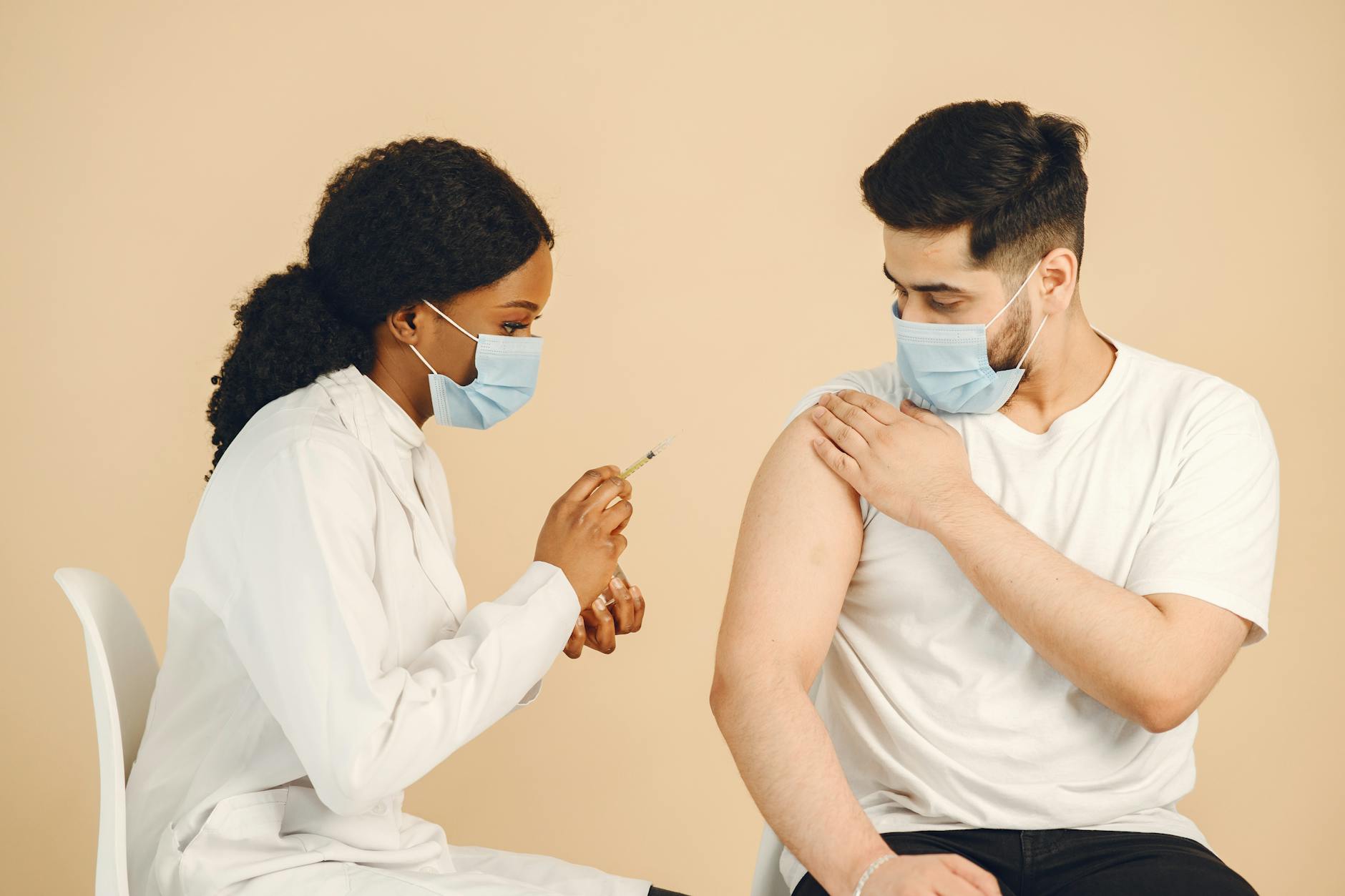 Image: Pexels/Gustavo Fring
If vaccine efficacy data is selectively withheld from the scientific literature — even in the world’s largest public health agency — it complicates the evidence base that other countries draw upon. International bodies including the World Health Organization have not formally commented on this specific episode, but WHO’s Strategic Advisory Group of Experts on Immunization (SAGE) evaluates evidence from CDC publications as part of its global vaccine recommendations.
Within the United States, the episode is unfolding in parallel with broader vaccine policy disputes. A court ruling that had halted certain vaccine-related changes is now being appealed, indicating that the legal and regulatory environment around immunization is in active flux. The nature of those underlying policy changes has not been fully detailed in current reporting.
Risk Assessment
The suppression of completed, internally reviewed vaccine efficacy data by a major national health authority represents a significant risk to public health communication — not through direct disease transmission, but through erosion of the scientific transparency that health agencies depend on to maintain public trust.The epidemiological risk calculus here is not straightforward. COVID-19 remains a circulating pathogen with ongoing transmission in many regions. Updated vaccine formulations continue to be developed and evaluated against evolving variants. Reliable, publicly accessible data on vaccine effectiveness is essential for both individual decision-making and population-level immunization strategy.
When that data is withheld — particularly if the rationale is political rather than scientific — several downstream risks emerge. Vaccine hesitancy can be reinforced by the perception that health agencies are managing information rather than sharing it. Clinicians lose access to current evidence. Public health officials in other countries who look to the CDC for guidance are left working with an incomplete picture.
Anonymous CDC employees quoted by CIDRAP have expressed concern that the decision to block the report sets a precedent for political interference in what has traditionally been a scientifically protected publication channel. That concern is shared broadly within the field of epidemiology, where the independence of surveillance data from political influence is considered foundational.
The hantavirus case in Nevada warrants routine monitoring but does not currently indicate an outbreak pattern. Hantavirus pulmonary syndrome cases in the United States are sporadic, typically numbering in the single to low double digits annually, predominantly in western states.
Prevention & Response
In the immediate term, the public health response to the CDC publication dispute has been primarily through institutional and legal channels. The appeal contesting vaccine-related policy changes suggests that at least some of the CDC’s recent decisions are being tested in court, which provides one avenue for scrutiny of the agency’s direction.
Scientific organizations and former CDC officials have called for the blocked report to be released. The MMWR operates under a mandate of scientific independence, and there is precedent for external pressure — from professional societies, congressional oversight, or media attention — prompting the release of withheld public health information.
For individuals, public health guidance on COVID-19 vaccination has not formally changed. Vaccine efficacy against severe illness and hospitalization has been well-documented across multiple independent studies published in peer-reviewed journals outside the CDC’s publication ecosystem, including the New England Journal of Medicine, The Lancet, and Nature Medicine. Those findings remain in the scientific record regardless of what the CDC publishes or withholds internally.
WHO guidance continues to recommend COVID-19 vaccination as a priority public health measure, particularly for high-risk populations including older adults, immunocompromised individuals, and those with significant comorbidities. Nothing in current reporting suggests that guidance is under review by WHO.
Regarding hantavirus in Nevada: standard prevention guidance applies — avoid disturbing rodent nesting sites, use appropriate respiratory protection when cleaning enclosed spaces that may contain rodent waste, and seek prompt medical attention if flu-like symptoms follow potential exposure. There is no vaccine or specific antiviral treatment for hantavirus pulmonary syndrome; management is supportive care in a clinical setting.
Sources
- CIDRAP (Center for Infectious Disease Research and Policy, University of Minnesota): “CDC blocks publication of report showing COVID vaccine efficacy,” April 22, 2026. https://www.cidrap.umn.edu/covid-19/cdc-blocks-publication-report-showing-covid-vaccine-efficacy
- CIDRAP: “Quick takes: Appeal to ruling halting vaccine changes, Bhattacharya defends nixing study, hantavirus case in Nevada,” April 30, 2026. https://www.cidrap.umn.edu/state-us-vaccine-policy/quick-takes-appeal-ruling-halting-vaccine-changes-bhattacharya-defends