Avian Influenza Spreads Across Species and Continents in April
H9N2 human cases reported in Italy and China while H5N1 resurfaces in US dairy cattle and poultry, raising renewed concerns about cross-species transmission.

Overview
A cluster of avian influenza developments across three continents in April 2026 has drawn renewed attention from global health authorities. Two distinct virus subtypes — H9N2 and H5N1 — are driving activity across human, poultry, and dairy cattle populations simultaneously, underscoring the persistent pressure that influenza A viruses exert at the animal-human interface. While none of the newly reported human cases indicate sustained person-to-person transmission, the geographic breadth of activity and the unusual travel-linked presentation in Europe make this a moment requiring careful monitoring.
The most notable event is a confirmed human H9N2 infection in Italy — the country’s first imported case of this subtype — linked to recent travel from Senegal. Simultaneously, Chinese health authorities reported two additional H9N2 human cases on the mainland, and H5N1 re-emerged in dairy cattle in the United States after a gap of several months. Compounding the picture, poultry outbreaks of H5N1 continue to accelerate in Indiana, one of the hardest-hit US states in recent weeks.
Current Situation
 Image: Pexels/Anton Uniqueton
The Italy case, formally notified to the World Health Organization on 21 March 2026, involves an adult male who had recently returned from Senegal. Next-generation sequencing confirmed the virus as Influenza A(H9N2). What makes this case epidemiologically significant is the absence of any identified exposure risk: according to WHO’s Disease Outbreak News report, the patient had no known contact with poultry and no documented exposure to any individual displaying similar symptoms before his own illness began. This lack of an obvious source complicates tracing and raises questions about where and how the transmission event occurred — whether in Senegal during travel, or at some undocumented point along the route.
In China, two additional H9N2 human cases were reported to international health networks on 14 April 2026, according to CIDRAP. Chinese authorities provided minimal detail on the cases — the locations of exposure, symptom severity, and recovery status were not publicly disclosed at the time of reporting. H9N2 is not new to China; the subtype has been responsible for the majority of human avian influenza infections globally over the past two decades, with China accounting for most of those cases due to widespread H9N2 circulation in live poultry markets.
On the veterinary side, the US Department of Agriculture’s Animal and Plant Health Inspection Service (APHIS) confirmed H5N1 in dairy cattle in Idaho in mid-April, marking the first detection in US cattle since a report from Wisconsin in December 2025. In the poultry sector, APHIS confirmed outbreaks in 56 separate flocks across the United States within a single 30-day window, with Indiana bearing a disproportionate share of recent activity.
Affected Regions
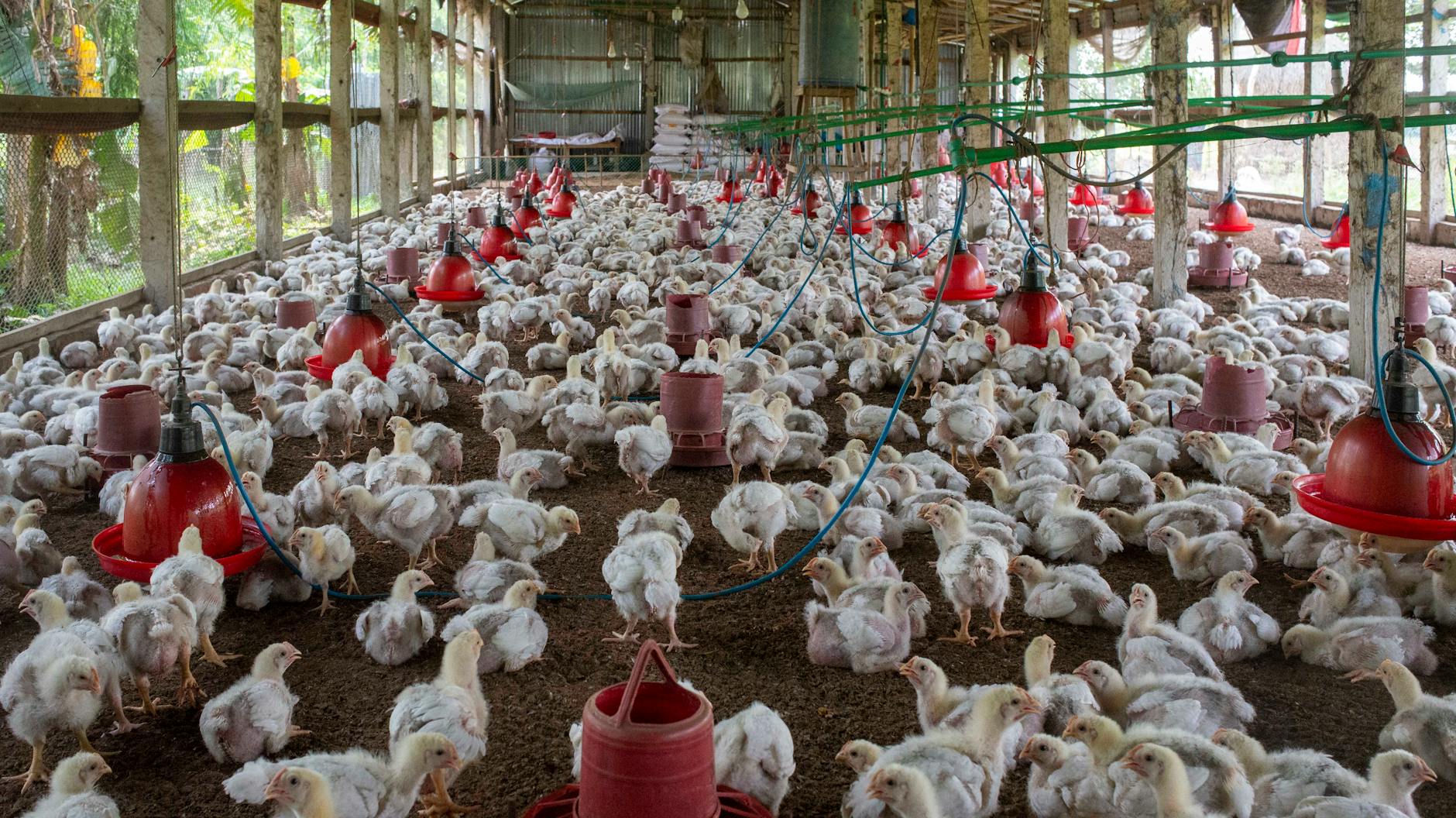 Image: Pexels/Tanvir Khondokar
The geographic footprint of the current avian influenza situation spans at least four countries across three regions.
Italy now joins the short list of European nations that have reported human H9N2 infections, and its case stands apart because the virus appears to have been acquired during international travel rather than through domestic poultry contact. This raises questions about whether H9N2 is circulating more broadly in West Africa — specifically Senegal — than current surveillance data capture. Senegal’s poultry sector and wild bird populations are understudied relative to Asia and Europe, and the Italy case could point to a surveillance gap in the region.
China remains the global epicenter of human H9N2 exposure, and the two April cases fit the established epidemiological pattern: sporadic infections without evidence of human-to-human spread. However, each new case is tracked carefully because H9N2 viruses have previously contributed genetic material to more dangerous reassortant strains, including some precursors to H7N9.
In the United States, H5N1 continues to move through both poultry and dairy systems, though at different intensities. Idaho’s dairy cattle detection is notable primarily because it breaks several months of silence in that sector — the December 2025 Wisconsin case had marked the last known bovine infection. It is unclear whether the Idaho detections represent renewed cross-species spillover from wild birds, movement between farms, or persistent low-level circulation that evaded prior sampling. Indiana’s poultry situation is more clearly active, with dozens of commercial and backyard flock confirmations stacking up week over week.
Risk Assessment
For the general public in unaffected countries, the overall risk from the current H9N2 and H5N1 activity remains low. The Italy case is a reminder that avian influenza A viruses can be acquired outside of traditional high-risk environments such as live poultry markets, and travelers to regions with active bird flu circulation should be aware of potential exposures even without direct animal contact.
WHO classifies human infections caused by novel influenza A subtypes — including H9N2 — as events with “potential for high public health impact” under the International Health Regulations (2005), which is why member states are required to report them promptly. This classification reflects risk potential, not necessarily current severity. To date, H9N2 has not demonstrated the ability to transmit efficiently between humans, and the case fatality rate in documented human infections has been substantially lower than that of H5N1.
H5N1, by contrast, carries a historically high case fatality rate in humans — above 50% in older case series — though the strains currently circulating in US livestock have not produced severe human disease in the handful of human infections recorded during the 2024–2026 US outbreak period. Farmworkers and others in close contact with infected cattle or poultry remain the primary at-risk group in the United States. The general public’s risk from consuming pasteurized dairy or properly cooked poultry remains negligible, as heat treatment effectively neutralizes the virus.
The detection of viral RNA in bovine semen — a topic currently under active research, according to CIDRAP reporting — adds a potential transmission pathway that requires further characterization. Researchers are working to determine whether detectable RNA indicates infectious virus capable of spreading between animals or to humans through semen-related contact, a question with significant implications for livestock breeding programs.
Vulnerable populations — including the immunocompromised, elderly individuals, and those with occupational exposure to livestock or poultry — warrant heightened vigilance and should consult national health guidance specific to their circumstances.
Prevention & Response
Italian health authorities initiated contact tracing and enhanced surveillance following the March notification, implementing monitoring protocols consistent with IHR (2005) obligations. The WHO was formally notified, and the case has been logged in the global influenza monitoring architecture. Because no clear source of exposure was identified, the scope of contact investigation likely extended to the patient’s travel history and any individuals he may have encountered during and after his return.
In the United States, APHIS continues to conduct herd-level testing in regions where H5N1 has been detected in dairy cattle, and biosecurity protocols for affected farms include movement restrictions, enhanced personal protective equipment requirements for farmworkers, and environmental decontamination. The Centers for Disease Control and Prevention (CDC) maintains guidance for people with occupational exposure to potentially infected animals, recommending the use of respiratory protection and eye protection when working in high-risk settings.
At the poultry sector level, Indiana’s ongoing outbreaks have triggered standard depopulation and quarantine protocols under the national response framework, with APHIS coordinating state-level responses across affected counties.
For travelers, the Italy case is a practical reminder to register poultry or live animal market visits during international travel and to seek medical evaluation promptly if respiratory illness develops after travel to regions with known avian influenza activity. Antiviral treatment with oseltamivir (Tamiflu) is most effective when initiated early in the course of illness.
Globally, WHO and its member states continue to track influenza A viruses in animals and humans through the Global Influenza Surveillance and Response System (GISRS), which provides the backbone for pandemic preparedness monitoring. The current H9N2 and H5N1 activity reinforces the importance of that system — and the value of prompt, transparent reporting by national IHR focal points.
Sources
- World Health Organization — Disease Outbreak News, Avian Influenza A(H9N2) – Italy (DON597), April 10, 2026
- CIDRAP (Center for Infectious Disease Research and Policy) — “Avian flu detected in Idaho dairy cows as study explores role of virus RNA detection in bovine semen,” April 16, 2026
- CIDRAP — “Two new H9N2 avian flu cases reported on mainland China,” April 14, 2026
- CIDRAP — “Indiana tracks more avian flu in hard-hit counties,” April 9, 2026
- CIDRAP — “Quick takes: Revised ACIP charter, human avian flu case in Italy, Salmonella outbreak, new polio cases,” April 10, 2026