Avian Flu Strains H5N1 and H9N2 Spread Across Multiple Continents
H5N1 and H9N2 avian influenza cases emerge across Europe, Asia, and the Americas in early 2026 as WHO logs new human infections.

Overview
Two distinct strains of avian influenza — H5N1 and H9N2 — are generating sustained global public health concern in early 2026, with new human cases confirmed across China, Europe, and the Americas. While neither strain is currently transmitting between people, the parallel circulation of multiple zoonotic influenza subtypes across several continents represents exactly the kind of surveillance challenge that pandemic preparedness frameworks are designed to address. Health authorities are monitoring the situation closely, and a pivotal vaccine trial is already underway.
The developments span a notable geographic arc: H9N2 has surfaced in Italy, far outside its usual range; H5N1 has claimed at least one life this year and been detected in wild marine mammals on the US Pacific coast; and US poultry systems, though showing early signs of improvement, remain under active surveillance. None of these threads, taken individually, signals imminent pandemic risk. Together, they illustrate how the interface between migratory birds, domestic livestock, and human populations creates persistent spillover opportunities.
Current Situation
 Image: Pexels/Yuri Shkoda
The World Health Organization reported that at least one person has died from H5N1 avian influenza in 2026, according to CIDRAP’s coverage of a late-April WHO summary. That same WHO accounting noted five human H9N2 infections detected so far in 2026: four in China and one in Italy — the latter representing the first documented import of H9N2 into Western Europe. Since WHO began systematic recording of H9N2 human cases in 2015, the total has reached 162 confirmed infections, with China accounting for all but three of them.
On the H9N2 front in China, three additional cases were confirmed in late April 2026, according to CIDRAP. Details on severity and outcomes for those individuals were not immediately available in publicly released data, but H9N2 infections in humans have historically produced a range of outcomes — from mild respiratory illness to severe pneumonia — with children and elderly adults among those at greatest risk of serious disease.
In the United States, the picture for H5N1 is more encouraging in one dimension: avian flu detections in domestic poultry fell across the country through April 2026, according to CIDRAP. The Dakotas had recorded the highest number of April poultry outbreaks, with the USDA also noting an outbreak at a Minnesota turkey facility housing 63,000 birds. Meanwhile, additional California sea lions and other marine mammals along the Pacific coast were confirmed positive for H5N1, expanding the documented host range of the virus in North American wildlife.
Affected Regions
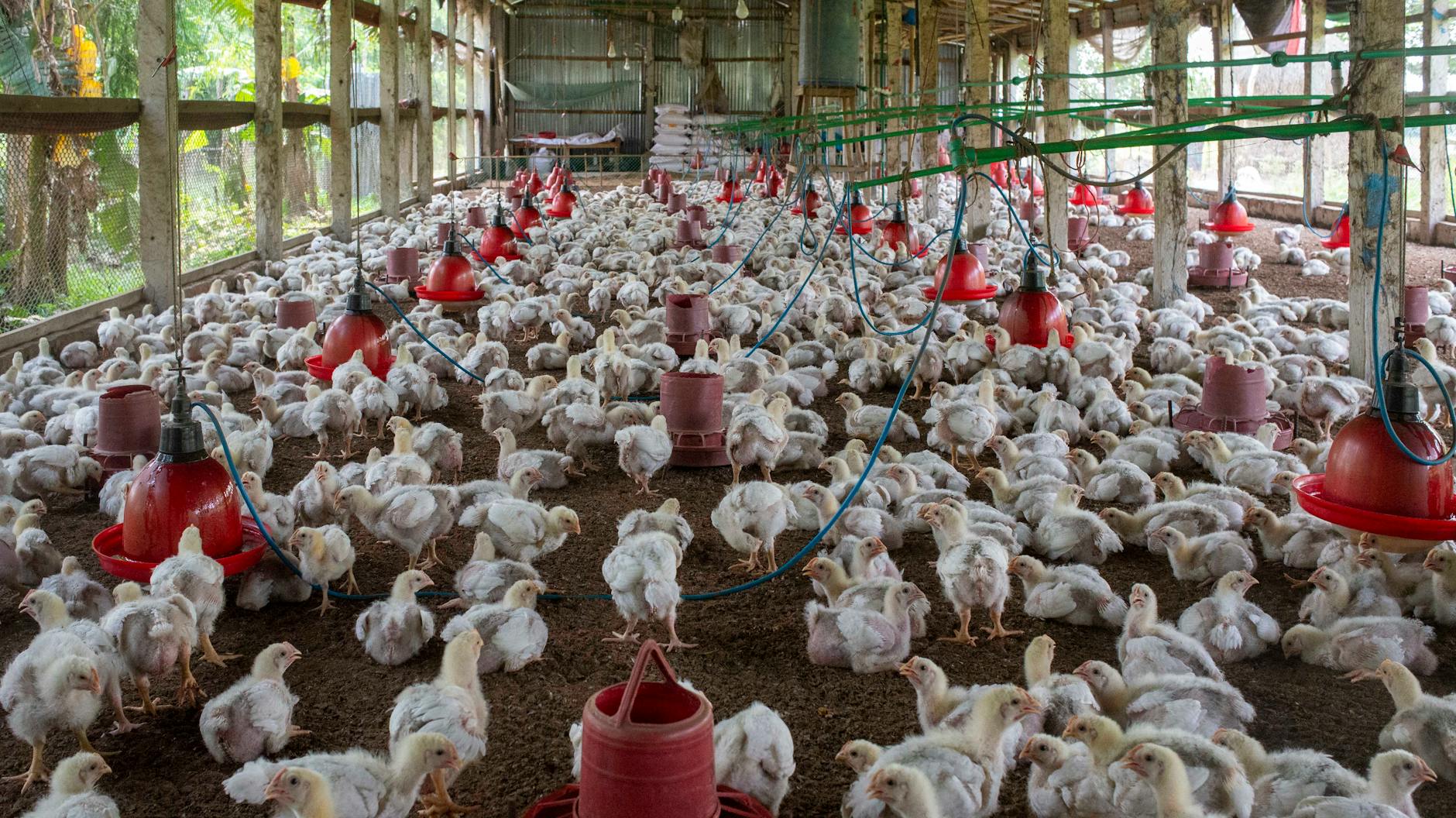 Image: Pexels/Tanvir Khondokar
Italy is at the center of the most geopolitically significant development in this reporting period: a confirmed H9N2 case in an adult male who had recently returned from Senegal. The Italian National IHR Focal Point notified the WHO on 21 March 2026. Next-generation sequencing confirmed the subtype as H9N2. Crucially, epidemiological investigation found no known exposure to poultry or sick individuals in the period before symptom onset — meaning the source of infection remains unclear.
Under the International Health Regulations (2005), any human infection caused by a novel influenza A subtype is automatically classified as an event with the potential for high public health impact and triggers mandatory WHO notification. Italy has implemented a standard package of monitoring, prevention, and control measures. The case is being treated as an imported event, and there is no indication of onward transmission within Italy.
China remains the primary locus of H9N2 human infections globally, consistent with the historical pattern. The latest cluster of cases fits within a well-established pattern of sporadic spillover from poultry markets and live-bird settings, which remain widespread in parts of rural China. The European Centre for Disease Prevention and Control (ECDC) flagged avian influenza as a priority topic in both its Week 15 and Week 17 Communicable Disease Threats Reports (covering the periods 4–10 April and 18–24 April 2026, respectively), underlining the breadth of active surveillance effort across the EU and EEA.
In the United States, the geographic focus of H5N1 activity has shifted somewhat since the peak of the 2024–2025 dairy cattle outbreak. Current detections are concentrated in upper Midwest poultry operations and in Pacific coast wildlife, with California marine mammal cases adding a new dimension to domestic exposure risk, particularly for wildlife workers and veterinary personnel.
Risk Assessment
For the general public in Europe and North America, the overall risk from avian influenza remains low, consistent with assessments maintained by the WHO and ECDC throughout the current outbreak cycle. Neither H9N2 nor H5N1 has demonstrated sustained human-to-human transmission, and the vast majority of recorded human infections can be traced to direct or close contact with infected birds or contaminated environments.
That said, several features of the current situation merit continued vigilance. The Italy H9N2 case is unusual because the patient had no identifiable exposure to poultry or sick contacts — a gap in the epidemiological picture that is not fully explained. This does not mean the virus is changing its transmission behaviour; undetected environmental exposures during travel are a plausible explanation. But it underscores the limitations of relying on exposure history alone for case detection.
H9N2’s emergence in a traveller returning from West Africa is a reminder that influenza surveillance gaps in source regions can delay detection and complicate contact tracing — a systemic vulnerability that extends beyond any single case.H5N1 carries a higher individual case fatality rate than H9N2, and the confirmation of at least one death in 2026 reinforces the importance of early clinical recognition in people with relevant animal exposure histories. Wildlife workers, poultry farm employees, and veterinary professionals remain the highest-risk occupational groups. The detection of H5N1 in California marine mammals — while not a new phenomenon globally — extends the list of plausible exposure environments beyond farms and live-bird markets.
Prevention & Response
Italian authorities moved quickly following the H9N2 detection, activating the standard WHO notification pathway and deploying domestic monitoring and contact management protocols. The European Centre for Disease Prevention and Control is maintaining active surveillance through its weekly Communicable Disease Threats Report, integrating avian influenza updates with broader respiratory virus epidemiology across EU member states.
On the vaccine front, the most significant development of the reporting period is the launch of a phase 3 clinical trial of Moderna’s mRNA-1083 H5 pandemic influenza vaccine candidate, designated mRNA-108, with participant dosing confirmed to have begun as of late April 2026, according to CIDRAP. This trial marks a critical step in mRNA-platform pandemic preparedness: if the candidate demonstrates efficacy and an acceptable safety profile, it would offer a potentially faster manufacturing pathway than traditional egg-based influenza vaccines in the event of a pandemic H5 strain emerging. Results are not expected immediately, but the trial’s initiation represents a meaningful acceleration of readiness infrastructure.
For the public, the core prevention message from health authorities remains consistent: people who work with poultry, wild birds, or other animals in regions with known avian influenza activity should follow established biosecurity protocols, use appropriate personal protective equipment, and report any respiratory illness with fever following animal contact to healthcare providers. Travellers to areas with active H5N1 or H9N2 circulation in poultry should avoid live-bird markets and contact with sick or dead animals.
The WHO continues to advise against any trade or travel restrictions based on the current cases. Routine seasonal influenza vaccination is recommended for all eligible populations, as it reduces the risk of co-infection and simplifies clinical differentiation during periods of heightened avian influenza activity.
Sources
- WHO Disease Outbreak News, Avian Influenza A(H9N2) – Italy (April 2026): https://www.who.int/emergencies/disease-outbreak-news/2026-DON597
- CIDRAP, WHO reports H5N1 death among variant zoonotic flu cases seen this year (April 29, 2026): https://www.cidrap.umn.edu/avian-influenza-bird-flu/who-reports-h5n1-death-among-variant-zoonotic-flu-cases-seen-year
- CIDRAP, 3 more H9N2 avian flu cases confirmed in China (April 21, 2026): https://www.cidrap.umn.edu/avian-influenza-bird-flu/3-more-h9n2-avian-flu-cases-confirmed-china
- CIDRAP, Avian flu detections drop across the US (April 30, 2026): https://www.cidrap.umn.edu/avian-influenza-bird-flu/avian-flu-detections-drop-across-us
- CIDRAP, More California marine mammals confirmed to have H5N1 (April 23, 2026): https://www.cidrap.umn.edu/avian-influenza-bird-flu/more-california-marine-mammals-confirmed-have-h5n1-avian-flu-usda-tracks
- CIDRAP, Avian flu vaccine trial quick take (April 22, 2026): https://www.cidrap.umn.edu/avian-influenza-bird-flu/quick-takes-avian-flu-vaccine-trial-antifungal-drug-discovery-untreated
- ECDC, Communicable Disease Threats Report, Week 17 (April 24, 2026): https://www.ecdc.europa.eu/en/publications-data/communicable-disease-threats-report-18-24-april-2026-week-17
- ECDC, Communicable Disease Threats Report, Week 15 (April 10, 2026): https://www.ecdc.europa.eu/en/publications-data/communicable-disease-threats-report-4-10-april-2026-week-15
Sources
- WHO Disease Outbreak News — Avian Influenza A(H9N2), Italy ↗
- CIDRAP — WHO reports H5N1 death among variant zoonotic flu cases seen this year ↗
- CIDRAP — 3 more H9N2 avian flu cases confirmed in China ↗
- CIDRAP — Avian flu detections drop across the US ↗
- CIDRAP — More California marine mammals confirmed to have H5N1 avian flu ↗
- CIDRAP — Quick takes: Avian flu vaccine trial ↗
- ECDC Communicable Disease Threats Report, Week 17 ↗
- ECDC Communicable Disease Threats Report, Week 15 ↗