Alleged Assassination Attempt on Trump Shakes U.S. Security Landscape
An alleged assassination attempt targeting President Trump marks a dangerous escalation in US political violence, with deep implications for democracy and security.
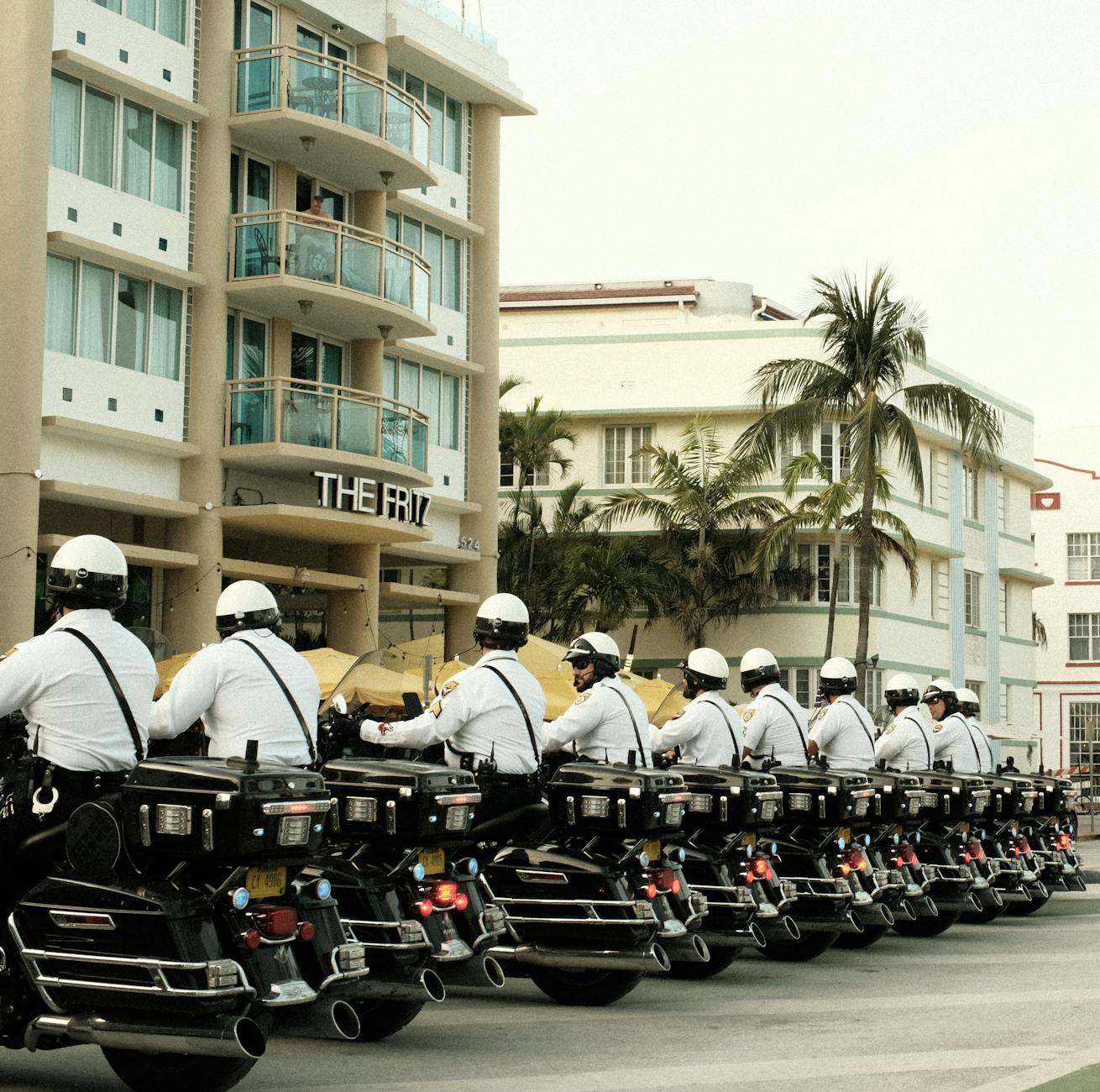
The United States has weathered political assassinations, attempted and actual, from Lincoln to Reagan. Each one reshapes the country’s security posture, its politics, and its self-image in ways that echo for decades. The latest alleged attempt against President Donald Trump — reported in the first days of May 2026 — lands at a moment when America’s political fault lines are already stretched dangerously thin.
What Happened
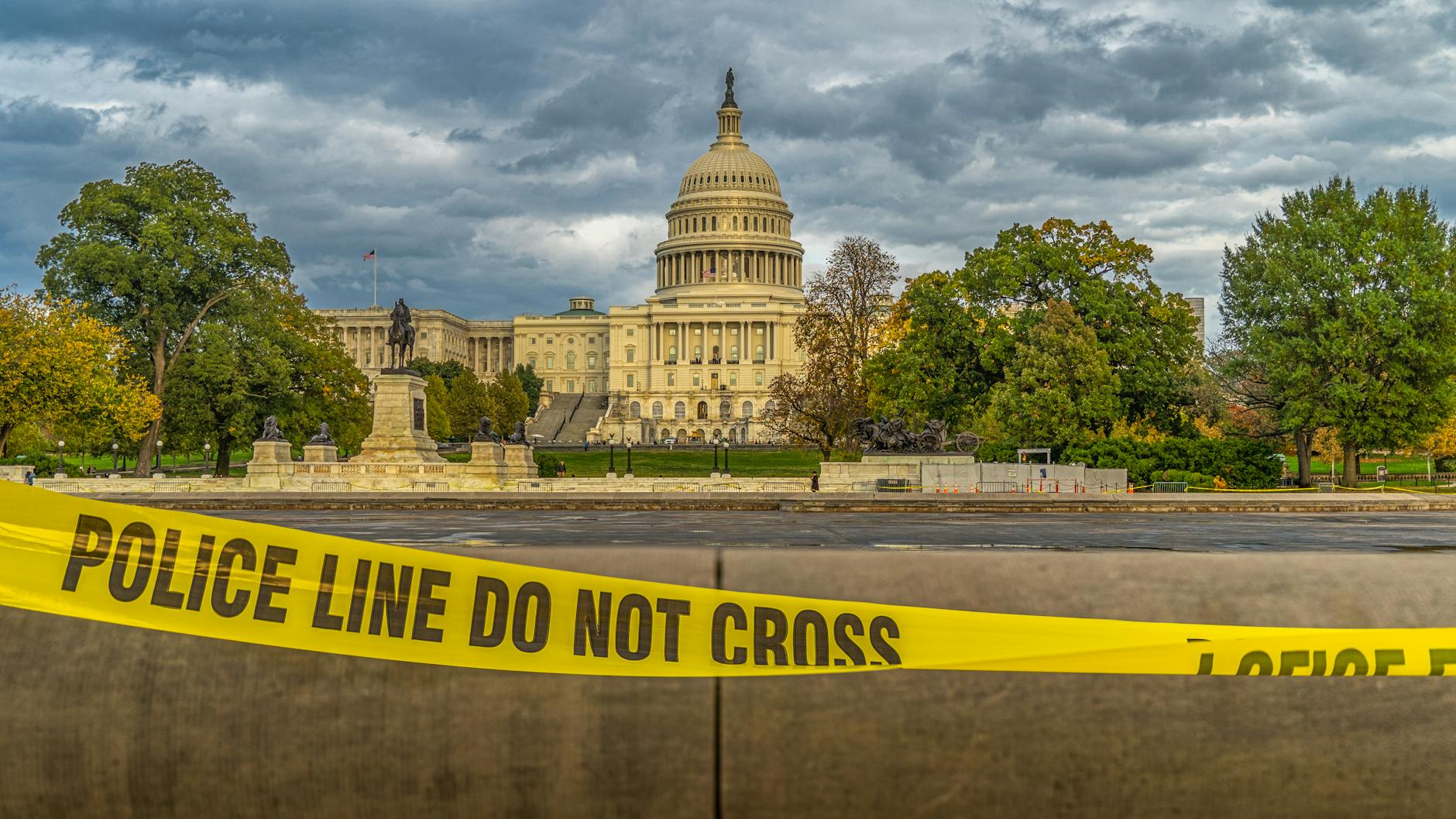 Image: Pexels/Pierre Blaché
According to threat-tracking platform War Monitor, an incident categorized under “US Domestic Security: Trump Assassination Attempt” was logged on May 1, 2026, and assigned a severity rating of 8 out of 10 — placing it among the most serious domestic threat classifications in the tracker’s system. The platform recorded it as a single incident within a 24-hour window, with no prior events logged in this specific category, suggesting this is an isolated — but high-stakes — reported episode.
Details at this stage remain limited and subject to official confirmation. What is known, and what can be responsibly reported, is that U.S. federal security agencies were activated in response, and the incident has been designated as a terrorism-adjacent event by the monitoring system. The Secret Service, which is responsible for presidential protection, has not publicly detailed the nature of the threat beyond standard operational protocol, which involves neither confirming nor denying specifics until investigations are complete.
This follows a pattern set by the two documented assassination attempts in 2024 — one at Butler, Pennsylvania in July 2024, where a gunman opened fire at a campaign rally and a bullet grazed Trump’s ear, killing one attendee; and a second foiled plot in September 2024 in Florida. Those events fundamentally altered how the Secret Service operates around Trump, and apparently, the threat environment has not improved since he returned to the Oval Office in January 2025.
Why It Matters
A credible threat against a sitting president is not merely a crime — it is a stress test on democratic governance itself.When the physical safety of a head of state is genuinely in question, the ripple effects extend far beyond the individual. Markets react. Allies and adversaries recalibrate. Domestic political actors — on all sides — respond in ways that can either stabilize or further inflame public sentiment. In the current American environment, the risk of the latter is significant.
Political violence in the United States has been trending upward since at least 2016, with threats against elected officials, public figures, and government buildings logged at record levels year after year, according to prior reporting by Reuters and The Washington Post. The FBI has repeatedly warned that domestic violent extremism — from actors across the ideological spectrum — represents one of the most complex threat environments the bureau has faced in its modern history.
The severity rating assigned by War Monitor — an 8 out of 10 — is not a casual designation. For context, incidents rated this high typically involve direct, credible threats with operational planning behind them, as opposed to online rhetoric or vague expressions of political anger. If that classification is accurate, this was not a hoax or a false alarm.
For Trump specifically, who has spent much of his political career arguing that he is the target of institutional persecution, an alleged assassination attempt — regardless of outcome — is also a political event. His administration, his base, and his opponents will each draw very different conclusions from the same set of facts.
The Bigger Picture
 Image: Pexels/Michael Anthony
Zoom out, and this incident sits inside a much larger and more troubling pattern. The United States is navigating a period of acute democratic stress: contested elections, an increasingly weaponized justice system (from the perspective of both parties), and a media ecosystem that systematically rewards outrage over accuracy.
In this context, political violence is both a symptom and an accelerant. It is a symptom of a political culture that has, over years, normalized the language of enemies and existential stakes. And it is an accelerant because each incident — regardless of who the target is — raises the temperature further, hardens tribal loyalties, and makes compromise harder to imagine.
Internationally, U.S. adversaries will be watching closely. Russia, China, Iran, and North Korea have all historically sought to exploit domestic instability in the United States. An alleged assassination attempt against the sitting president, even a failed one, signals internal fracture in ways that can be weaponized in information operations abroad — as propaganda demonstrating American democratic dysfunction.
At the same time, U.S. allies in NATO and the Indo-Pacific will be anxious. A politically destabilized America is an uncertain security guarantor. The question of presidential continuity — and what happens to ongoing foreign policy commitments if the chief executive is incapacitated or eliminated — is one that defense planners across Europe and Asia will be quietly gaming out.
For the domestic opposition, the situation is genuinely complex. Condemning political violence is both morally obligatory and tactically necessary, but in a polarized environment, any statement can be weaponized. Democratic leaders will need to navigate that terrain carefully — and historically, most have managed it, though never without some cost.
What to Watch
In the days and weeks ahead, several developments will be critical to monitor:
The official investigation: The FBI and Secret Service will lead the inquiry. Watch for how quickly — and how transparently — the government discloses the nature of the alleged attempt, the identity of any suspect or suspects, and the means involved. Speed and transparency build public trust; delays and opacity feed conspiracy theories on all sides.
Congressional response: Historically, assassination attempts prompt bipartisan calls for unity — but that consensus tends to be brief. Watch whether Republican and Democratic leadership sustain a unified message, or whether the incident becomes fodder for partisan point-scoring within 48 to 72 hours.
Trump’s own response: How the president characterizes the attempt will be enormously consequential. If he uses it to frame his political opponents as responsible, it could dramatically escalate domestic tensions. If he takes a more measured approach, it could represent a rare moment of potential de-escalation.
Security policy changes: After the Butler shooting in 2024, the Secret Service underwent significant internal review. Another near-miss — or confirmed attempt — will almost certainly trigger another round of institutional reckoning, potentially including new legislation around the protection of sitting officials.
Geopolitical signaling: Monitor whether any foreign governments issue unusual statements, and watch for any uptick in adversarial information operations citing U.S. political instability. These are often the earliest indicators of how the international community is interpreting events in Washington.
The United States has survived every previous attempt on a president’s life — and the attempts that succeeded — by choosing, eventually, continuity over catastrophe. Whether that precedent holds depends not on institutions alone, but on the choices made by political leaders, journalists, and citizens in the hours and days that follow.
Details in this report reflect information available as of May 8, 2026. This is a developing situation; readers are encouraged to consult official government statements and major wire services for the latest verified reporting.
Sources
- War Monitor threat tracking platform flagged this as a Severity 8 domestic security incident on May 1, 2026.
- Background on prior assassination attempts and Secret Service protocols drawn from Reuters and previously published FBI threat environment reports.
- Historical context on U.S. political violence trends referenced from prior Washington Post and Reuters investigative reporting.